
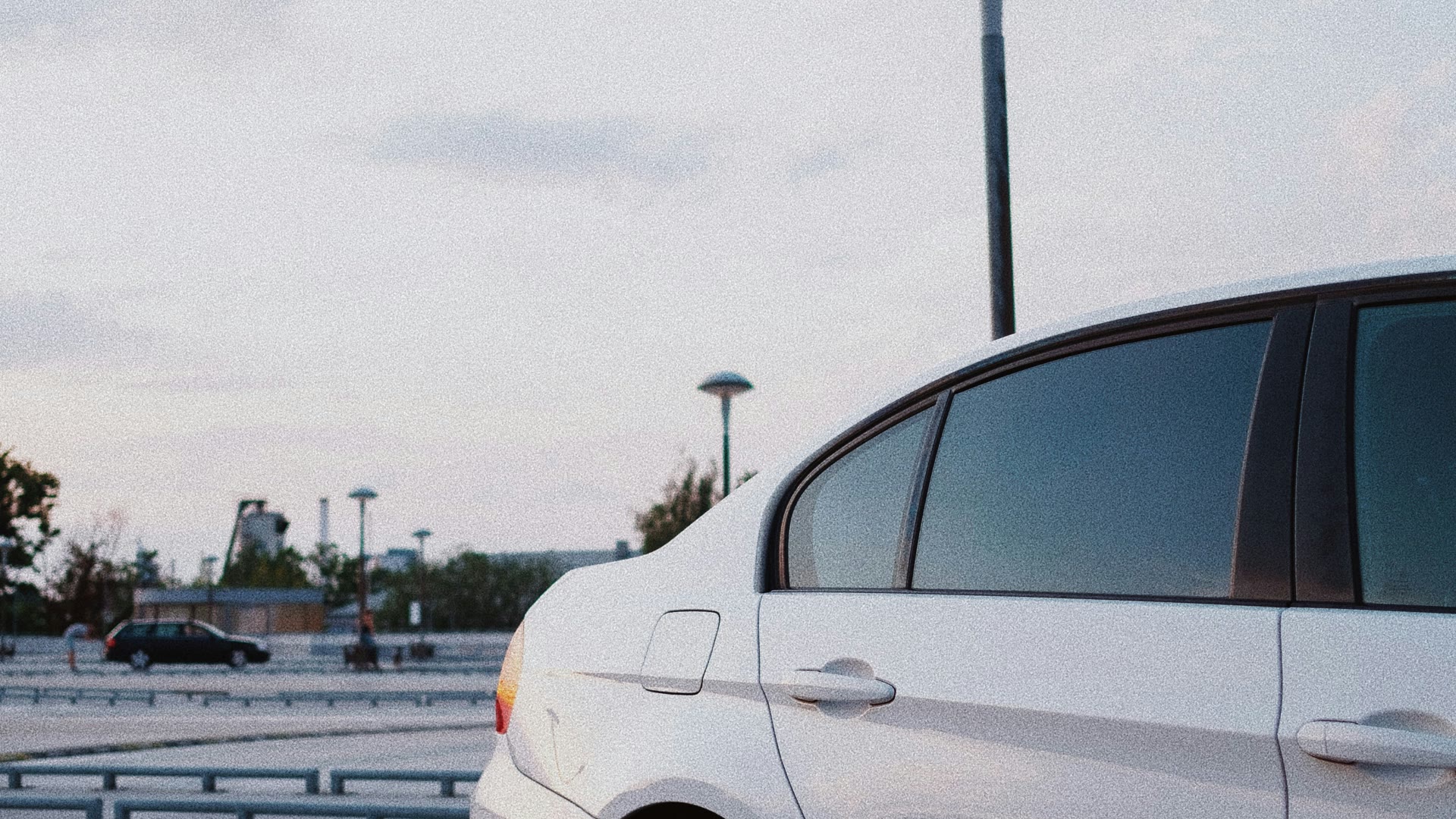
Darkest Legal Tint Perth WA35% Front, 20% Rear
And the reason a film sold as “35%” often finishes illegal on the car it's fitted to.
For a passenger car in WA, the darkest legal tint is 20% VLT on windows behind the “B” pillar, and only where ADR14-compliant external rear vision mirrors are fitted on both sides. Windows forward of the “B” pillar must be at least 35% VLT.
The part that catches people out: VLT is measured through the factory glass and the installed film together, never the film label alone. Ask for a finished meter reading, not a film called “35%”.
Can I Get 20% Tint on My Front Windows in WA?
No. 20% is too dark for the front side windows of a WA passenger car. Anything forward of the “B” pillar must finish at a minimum of 35% VLT, measured through the factory glass and film together. A film labelled 35% can still finish below 35%, so the installed result is what has to be checked.
Why a 35% Film Can Fail
Factory glass already removes some light before any film goes on. Multiply the two and the finished window is darker than the film's label suggests, which is why two identical cars with the same film can measure differently.
Worked example: factory glass transmitting 80% of visible light, with a 35% film over it, finishes at roughly 28% (80% × 35%). That is below the 35% front-window minimum, despite the film being sold as 35%.
The same logic cuts the other way: a film labelled 20% is not automatically legal on rear glass either. The finished measurement decides, every time.
The WA Limits, Window by Window
Front Side Windows: 35% Minimum
Front side windows must measure no lower than 35% VLT after the film is on. The requirement applies to the finished glass-and-film combination, not a film box, a sample card or an advertised shade name.
Behind the “B” Pillar: 20% Minimum
Passenger-car glass behind the “B” pillar can go as low as 20% VLT, but only where ADR14-compliant external rear vision mirrors are fitted on both sides. That 20% is a minimum finished result, not permission to fit anything labelled 20%. Factory privacy glass counts toward the reading, so rear glass that already looks dark needs checking before film is added.
The limits at a glance
| Vehicle glass area | Minimum finished VLT | Condition |
|---|---|---|
| Forward of the “B” pillar | 35% | Measured through factory glass and film together |
| Behind the “B” pillar | 20% | Passenger cars with ADR14-compliant external mirrors both sides |
| Main windscreen | No film | Except a top band above the wiper sweep, outside primary vision, no more than 10% of the windscreen |
| Any tinted window | Reflectance 10% max | Mirror-look and reflective films are not permitted |
Why Film Percentage Is Not the Finished VLT
Estimating the Finished Reading
As a planning calculation, multiply the untreated-glass VLT by the film VLT. It's an estimate, not a compliance check: a meter reading on the completed window is the only thing that settles it. But it's enough to show why the popular shades so often fail.
| Untreated glass | Film VLT | Approx. finished | Clears 35% front? |
|---|---|---|---|
| 80% | 35% | 28% | No |
| 80% | 50% | 40% | Likely, subject to a finished reading |
| 90% | 35% | 31.5% | No |
How to Get It Right
- Measure the factory glass before choosing a film.
- Pick a film that can still clear the relevant minimum once fitted.
- Measure the completed glass-and-film result.
- Keep the installation and product paperwork with the vehicle records.
Enforcement is on the measured finished result, so a shade chosen off a sample card is a gamble on someone else's glass.
What Happens if My Tint Is Too Dark in WA?
Tint measuring below the legal limit can attract a defect notice requiring the film to be removed or corrected. You can end up paying twice: once to have it fitted, once to have it stripped. Enforcement is against the finished glass-and-film reading, not the film's advertised shade.
What Gets Picked Up
- A front window finishing below the 35% minimum.
- Passenger-car glass behind the “B” pillar below 20%, or without the required mirrors.
- Reflectance above 10%, even where the shade itself looks acceptable.
- Film on the main windscreen beyond the permitted top band.
A product called “20%” or “35%” is not proof of compliance, because factory glass varies between vehicles. This is a practical summary rather than legal advice.
Utes, Vans and the Windscreen Band
Goods-Carrying Vehicles Get Darker Rear Glass
Genuine goods-carrying vehicles, meaning a ute with a separate cargo area or a qualifying panel van, are not subject to the passenger-car 20% minimum on glass behind the driver. That rear glass can go considerably darker. Front side windows stay at the 35% minimum, same as any vehicle.
Qualification depends on how the vehicle is built and registered, not on whether it looks like a ute. Body style, seating layout and registration details all bear on it, so confirm the classification before fitting darker rear film rather than assuming it from appearance. A dual-cab used purely for work does not automatically qualify.
The Windscreen Band
No film on the main windscreen except a top band that stays above the wiper sweep, sits outside the primary vision area and covers no more than 10% of the windscreen area. Reflectance must not exceed 10% on any window, which rules out mirror-look and reflective films regardless of how the rest of the vehicle measures.
Darker Is Not the Same as Cooler
If the reason you want the darkest legal shade is heat, the figure to compare is not VLT but TSER, total solar energy rejected. VLT only describes how much visible light gets through. A lighter film from a strong range can reject more heat than a darker film from a weaker one.
That is why the film on our ceramic tint Perth page, at a legal shade, often feels cooler than a darker film, while carbon tint gives a deep look at the same VLT. Every film we fit also provides strong UV protection. Compare them all on our car window tint films page.
So confirm the finished window can meet the VLT minimum first, then compare TSER within the shades that qualify. Chasing darkness for comfort is the wrong order of operations.
Published film figures
These describe the film product. None of them is a finished-window reading, and none guarantees compliance on your glass.
| Film | VLT | TSER | UV rejection |
|---|---|---|---|
| SunTek CIR 70 Black | 71% | 46% | >99% |
| SunTek CIR 35 Black | 35% | 52% | >99% |
| SunTek CIR 20 Black | 22% | 58% | >99% |
| Rayno Phantom S9-50 | 50% | 53% | >99.99% |
| Rayno Phantom S9-35 | 35% | 58% | >99.99% |
| Rayno Phantom S9-20 | 20% | 64% | >99.99% |
Note the pattern: Rayno Phantom S9-50 at 50% VLT publishes 53% TSER, while the much darker SunTek CIR 20 Black publishes 58%. Barely more heat rejection for a great deal less visibility.
Sources
Department of Transport bulletin IB-119D, the Road Traffic (Vehicles) Regulations 2014, and ADR14 for external rear vision mirrors. Film figures are manufacturer-published for the named products. Requirements change, so check the current official guidance before fitting.
Is 35% or 20% tint darker?
Understanding the Visual Difference Between 35% and 20% Tint
The difference between 35% and 20% tint is visually significant. A 35% VLT tint allows 35% of visible light to pass through, offering a moderate level of darkness that enhances privacy without overly restricting visibility. This is the legal limit for front side windows in Perth. In contrast, a 20% VLT tint is much darker, permitting only 20% of visible light to enter. This level of tint is legally allowed only on rear side and rear windows in Perth. The darker shade of 20% provides greater privacy and more effective heat and UV reduction, but it can also make it harder to see out, especially at night. Choosing between these options depends on your needs for privacy, aesthetics, and legal compliance. Always ensure that your chosen tint meets the legal requirements for each window type to avoid fines and ensure road safety.
Legal Implications of Choosing 20% vs 35% Tint in Perth
In Perth, choosing a 20% tint for your front side windows is illegal and can result in fines, vehicle inspection failures, and mandatory removal of the tint. Only rear side and rear windows may have a 20% VLT. The 35% VLT is the minimum allowed for front side windows. These laws are enforced to ensure driver visibility and road safety. If you install a 20% tint on your front windows, you risk being pulled over and penalized. Always consult with a reputable installer who understands local regulations and can provide certification of compliance. This ensures your vehicle remains roadworthy and avoids unnecessary legal trouble.
Key Differences Between 35% and 20% Tint
- 35% VLT: lighter, legal for front side windows in Perth
- 20% VLT: darker, legal only for rear side and rear windows
- 20% provides more privacy and heat rejection
Visual Comparison: 35% vs 20% Tint
| VLT Percentage | Appearance | Legal for Front Windows? | Legal for Rear Windows? |
|---|---|---|---|
| 35% | Moderately dark | Yes | Yes |
| 20% | Very dark | No | Yes |
Benefits of Choosing the Darkest Legal Tint in Perth
Privacy and Security Advantages
One of the most compelling reasons to opt for the darkest legal tint is the increased privacy it provides. With a 20% VLT on rear windows, it becomes significantly harder for outsiders to see into your vehicle, protecting your belongings from prying eyes and reducing the risk of theft. This added privacy is especially valuable for families, professionals who carry equipment, or anyone who regularly leaves items in their car. Additionally, window tinting can deter opportunistic thefts, as criminals are less likely to target vehicles when they cannot easily see valuables inside. Security films can also add a layer of protection by holding shattered glass together in the event of an accident or break-in attempt. By choosing the darkest legal tint, you maximize these privacy and security benefits while remaining compliant with Perth’s regulations.
UV Protection and Heat Reduction
The darkest legal tints are highly effective at blocking harmful ultraviolet (UV) rays and reducing heat inside your vehicle. Quality films, such as those from the Rayno Phantom series or SunTek Ceramic, can block up to 99% of UV rays, protecting your skin and preventing interior fading. Heat reduction is another major benefit, as darker tints significantly lower cabin temperatures, making driving more comfortable and reducing reliance on air conditioning. This not only enhances comfort but can also improve fuel efficiency. By choosing a premium tint that complies with Perth’s VLT laws, you gain maximum UV and heat protection without sacrificing legality.[7][4]
Aesthetic Enhancement and Resale Value
Beyond functional advantages, the darkest legal tint can dramatically improve your vehicle’s appearance. A uniform, sleek look not only enhances curb appeal but can also increase resale value. Many buyers prefer vehicles with professionally installed, legal tints for both style and practicality. Choosing a reputable installer and a high-quality film ensures the tint remains attractive and bubble-free for years, further protecting your investment. By staying within legal limits, you avoid the risk of having to remove the tint before selling or trading in your vehicle.
Top Benefits of Darkest Legal Tint
- Enhanced privacy for passengers and belongings
- Superior UV and heat protection
- Improved vehicle appearance
- Potential increase in resale value
- Reduced risk of theft
Choosing the Right Window Tint for Your Vehicle in Perth
Comparing Tint Film Types: Ceramic, Carbon, and Dyed
There are several types of window tint films available, each with unique properties. Ceramic tints, such as those in the Rayno Phantom series or SunTek Ceramic, are considered top-tier for their superior heat rejection, UV protection, and signal clarity. They do not interfere with electronic devices and offer long-lasting durability. Carbon tints provide excellent heat reduction and a matte finish, making them a popular choice for those seeking aesthetics and performance at a moderate price. Dyed films are the most affordable but offer less heat rejection and may fade over time. When choosing a tint, consider your budget, desired appearance, and performance needs. Ceramic tints are ideal for those seeking maximum benefits, while carbon and dyed films may suit those with specific style or budget requirements.[12]
How to Select a Reputable Tint Installer in Perth
Choosing a qualified installer is critical to ensuring your tint is applied correctly and legally. Look for businesses with strong local reputations, positive customer reviews, and certification from industry associations. Ask about their experience with premium films like Rayno Phantom series and SunTek Ceramic, and request a written warranty for both materials and workmanship. A reputable installer will provide a compliance certificate, confirming that your tint meets Western Australia’s legal requirements. Avoid DIY kits or unlicensed providers, as improper installation can lead to bubbling, peeling, or non-compliance fines. Visiting the installer’s premises and viewing previous work can also provide peace of mind.
Key Considerations for Legal and Practical Tint Selection
When choosing your window tint, balance legal compliance with your personal needs. Consider factors such as your driving habits, privacy preferences, and the local climate. Ensure the combined VLT of your glass and film meets Perth’s legal limits for each window. Opt for films with proven UV and heat rejection ratings, and always request documentation from your installer. Remember, the darkest legal tint is not always the best choice for every driver—visibility, especially at night, should be a priority. Discuss your options with a professional to find the ideal solution for your vehicle.
Steps to Choosing the Right Tint
- Determine your privacy and heat reduction needs
- Research film types (ceramic, carbon, dyed)
- Check legal VLT limits for your vehicle
- Select a reputable installer
- Request a compliance certificate
Window Tint Film Comparison
| Film Type | Heat Rejection | UV Protection | Durability | Cost |
|---|---|---|---|---|
| Ceramic | Excellent | Up to 99% | High | High |
| Carbon | Good | Up to 95% | Medium | Medium |
| Dyed | Fair | Up to 85% | Low | Low |
Penalties and Enforcement for Illegal Window Tint in Perth
Fines and Legal Consequences for Non-Compliance
If your vehicle’s window tint does not meet Western Australia’s legal requirements, you may face on-the-spot fines ranging from $100 to $500, depending on the severity of the violation and whether it is a repeat offense. In addition to monetary penalties, your vehicle may be deemed unroadworthy, requiring you to remove the non-compliant tint and pass a follow-up inspection before returning to the road. Persistent non-compliance can result in higher fines, demerit points, and even vehicle impoundment in extreme cases. Law enforcement officers use calibrated meters to measure VLT during roadside checks, and non-compliant vehicles are often flagged during annual inspections or after accidents. Keeping documentation of your tint’s compliance can help resolve disputes quickly.[15]
How to Check and Maintain Legal Tint Compliance
To avoid penalties, regularly check your window tint’s VLT using a certified meter or by consulting your installer. Keep your compliance certificate in your vehicle at all times, as this can expedite any roadside checks. If you suspect your tint has faded or changed over time, have it re-measured and replaced if necessary. Professional installers often offer free compliance checks and can provide written documentation. Staying proactive with maintenance and documentation ensures you remain within the law and avoid costly penalties.
Steps to Ensure Ongoing Tint Compliance
- Request a compliance certificate after installation
- Keep documentation in your vehicle
- Schedule periodic VLT checks
- Replace tint if it fades or peels
- Consult professionals for any concerns
Tinting Process Step-by-Step: What to Expect in Perth
Initial Consultation and Film Selection
The tinting process begins with a consultation, during which you discuss your needs, preferences, and legal requirements with the installer. A reputable provider will explain the differences between film types such as ceramic, carbon, and dyed, help you select the best option for your vehicle and budget. You’ll review VLT percentages to ensure compliance with Perth’s laws and may view samples or previous installations. This step is crucial for aligning expectations and ensuring you choose a film that balances privacy, heat rejection, and aesthetics. The installer will also provide a quote and explain the warranty terms.
Professional Installation: Steps and Quality Assurance
On installation day, the vehicle’s windows are thoroughly cleaned to remove any dirt or debris. The chosen film is then precisely cut and applied to each window, ensuring a seamless fit. Professional installers use specialized tools to eliminate bubbles and ensure a smooth finish. After application, the film is inspected for defects and trimmed as needed. The installer will check the final VLT to confirm legal compliance and provide a compliance certificate. The entire process typically takes a few hours, depending on the number of windows and the complexity of the job. Quality assurance is paramount, as a poor installation can lead to peeling, bubbling, or legal issues.
Aftercare and Maintenance for Long-Lasting Results
Proper aftercare is essential to ensure your window tint remains effective and attractive for years. Avoid rolling down windows for at least 48 hours after installation to allow the film to fully adhere. Clean tinted windows with a soft cloth and ammonia-free cleaner to prevent scratching or discoloration. Inspect your tint periodically for signs of bubbling, peeling, or fading, and address any issues promptly with your installer. Most premium films, such as Rayno Phantom series and SunTek Ceramic, come with long-term warranties covering defects and fading. Following these aftercare steps will maximize the lifespan and performance of your tint.[19]
Tinting Process Steps
- Consultation and film selection
- Vehicle preparation and cleaning
- Precision film cutting and application
- Quality inspection and VLT check
- Aftercare instructions and warranty
What Types of Vehicles are Subject to Tinting Regulations?
All kinds of vehicles in Perth face tinting rules. This includes cars, vans, trucks, and even buses. Each type must follow specific regulations for how dark the tint can be. The law doesn’t play favorites; every vehicle from a small car to a large bus must meet these standards.
Tinting laws ensure safety on the road by making sure drivers can see well.
Next up, let’s talk about what medical exemptions exist for window tinting.
What Medical Exemptions Exist for Window Tinting?
Some people may have special medical needs that require darker window tints. These exemptions are for individuals with specific health conditions that necessitate reduced light exposure.
Medical exemptions allow for window tints that exceed standard legal limits. Certain documentation is usually required to verify the need for a medical exemption, and it’s important to stay informed about any changes to legislation regarding window tinting and medical exemptions.
If you find yourself needing such an exemption, seek guidance from certified installers who can provide advice on compliance and the application process for medical exemptions related to window tinting.
By following these rules, you ensure accurate information is included in your writing while maintaining simplicity and ease of understanding for the reader.
How to Measure Window Tint Darkness?
To measure window tint darkness, you can use a tint meter. Here’s how to do it:
- Get a Tint Meter: This device measures the darkness of window tint by detecting the amount of light passing through.
- Place the Meter on the Window: Position the sensor against the tinted glass, ensuring direct contact for an accurate reading.
- Record the Reading: The meter will display a numerical value, indicating the darkness level of the tint.
- Check Compliance: Compare the reading to local regulations to ensure your tint meets legal requirements.
- Repeat for Accuracy: For precise results, take readings at multiple points on each window and calculate an average darkness level.
- Maintain Records: Keep a record of your measurements in case you need to verify compliance in the future.
Using a tint meter is crucial in ensuring your window tint meets legal standards and avoids potential fines or penalties.
Can Illegal Tinting Affect Your Insurance?
After facing fines and penalties for illegal tinting, you might ponder its impact on your insurance. Illegal window tinting could lead to insurance troubles. If your car gets involved in an accident and it’s found that the tint on the windows doesn’t comply with legal requirements, this could result in reduced insurance coverage or even denial of a claim.
Insurers often consider illegal modifications like overly dark window tints as a breach of policy terms. This means they can refuse to cover damages linked to these illicit changes.
In the worst cases, driving with illegally tinted windows may even void your insurance altogether, leaving you fully responsible for any costs if something goes wrong. Therefore, it’s crucial to ensure that your window tints adhere to local laws and regulations to avoid potential complications with your car insurance.
It’s essential to note that illegal tinting might not solely impact the legality of operating your vehicle but also have significant implications for your financial security through compromised insurance coverage.
What Should You Do if You Receive a Tint Violation?
If you receive a tint violation, here’s what you need to do:
- Contact the issuing authority to understand the specific violation and gather details about the citation.
- Review the relevant tinting regulations in Perth to assess whether your window tint complies with the law.
- Consider consulting a professional window tinting service or legal expert for advice on how to address the violation.
- Determine if your vehicle qualifies for any medical exemptions for window tinting and gather necessary documentation.
- If required, arrange to have your window tint adjusted or removed to meet legal requirements.
- Respond to the violation notice within the specified timeframe and follow any instructions provided by the authority issuing the citation.
This approach can help you navigate a tint violation effectively, ensuring compliance with local laws and minimising any potential penalties or consequences.
What Government Resources are Available?
When it comes to understanding the legal limits of car window tinting in Perth, it’s essential to know where to find reliable government resources. In Perth, the Department of Transport is a key government entity that provides information and guidelines regarding window tinting regulations for vehicles.
They offer detailed insights into the legal restrictions, permissible darkness levels, and any medical exemptions related to car window tinting. By accessing these official resources, vehicle owners can ensure compliance with local laws and make informed decisions about their car window tinting needs.
Moreover, the Department of Transport, local law enforcement agencies also provide valuable resources and information on window tinting regulations. Their websites often feature relevant laws and penalties associated with illegal tinting practices, helping individuals understand the consequences of non-compliance.
These authoritative sources empower car owners with the necessary knowledge to navigate the complexities of legal requirements for window tinting in Perth.
Darkest legal tint
Common Questions
Front side windows must finish at 35% VLT or lighter. Glass behind the “B” pillar can finish at 20% or lighter, but only where ADR14-compliant external rear vision mirrors are fitted on both sides. Both are measured through the glass and film together.
Not automatically. A film labelled 35% can finish below the 35% minimum once it is over factory glass. Ask for the untreated glass to be measured first and the completed window checked after, because the finished reading is what the law tests.
Protec Glass Tinting charges from $249, with most vehicles between $249 and $550 depending on the vehicle, window count, film and any existing tint that needs removing. Ask whether the quote includes assessing the likely finished VLT for your glass, so you aren't paying for a shade that fails on your car. Full price list here.
Yes. Factory privacy glass already reduces transmission before any film is added, so it forms part of the finished reading. Rear glass that already looks dark may have very little headroom left for additional film.
No, a 5% tint often called “limo tint” is not legal for passenger vehicles in Australia, including Perth. The darkest legal tints are 35% VLT for front side windows and 20% VLT for rear windows. 5% tints are only permitted for specific vehicles with exemptions.
A 70% tint is very light and often barely noticeable, as it allows 70% of visible light to pass through. It offers minimal privacy but can still provide some UV and heat protection, making it suitable for windscreen sun strips where required by law.
15% tint is darker than 30% tint. The lower the VLT percentage, the less light passes through, resulting in a darker appearance. However, 15% is not legal for most car window tinting in Perth without an exemption.
5% tint is extremely dark and offers maximum privacy, making it very difficult to see inside the vehicle from the outside, especially during the day. However, it is not legal for most vehicles in Perth without a special exemption.
Ceramic tint is generally superior, offering better heat rejection, UV protection, and signal clarity compared to carbon tint. However, carbon tint is more affordable and still provides good performance. Your choice should depend on your budget and desired benefits.
Yes, 5% tint commonly called “limo tint” is the darkest available, allowing only 5% of visible light through. However, it is not legal for standard vehicles in Perth and is typically reserved for special-use vehicles or those with exemptions.
Well, if you’re looking to enhance your car’s look or keep it cool, then car window tinting is a great way to go about it! But remember, there are legal limits set by authorities in Perth.
The darkest legal limit for window tints varies across different areas of the vehicle. It’s always best to consult with window tinting specialists who have knowledge on local regulations.
There are plenty of options around but Protec Glass Tinting service at competitive prices across Perth including places like Osborne Park.
Besides giving your ride a sleek look and reducing glare, it also provides UV protection which helps protect the interior of your vehicle from sun damage.
While DIY kits exist, having your auto glass professionally treated guarantees that only the best materials are used and ensures correct application aligned with legal limits – plus they’ll get you back on the road quickly!
Absolutely! Many businesses offer more than just auto service; they often include office window tinting as well as paint protection film applications to keep your car looking new and used vehicles alike protected from scratches.
Ready when you are
Get a Compliant Quote
Anywhere in Perth
Tell us the car and where it'll be parked. We'll talk through the finished VLT before any film is cut.